ChatGPT Ads and GEO:ChatGPT ads are no longer a rumor. OpenAI has been testing them since early 2026, and business owners keep asking me the same question: should we pay for AI visibility, or earn it?
I’ll be upfront. I haven’t run a ChatGPT ads campaign yet. My experience comes from studying digital marketing and running hands-on experiments with AI tools for SEO, content, and research. That still teaches something useful. Paid and earned AI visibility are two different games, and they work best as a pair.
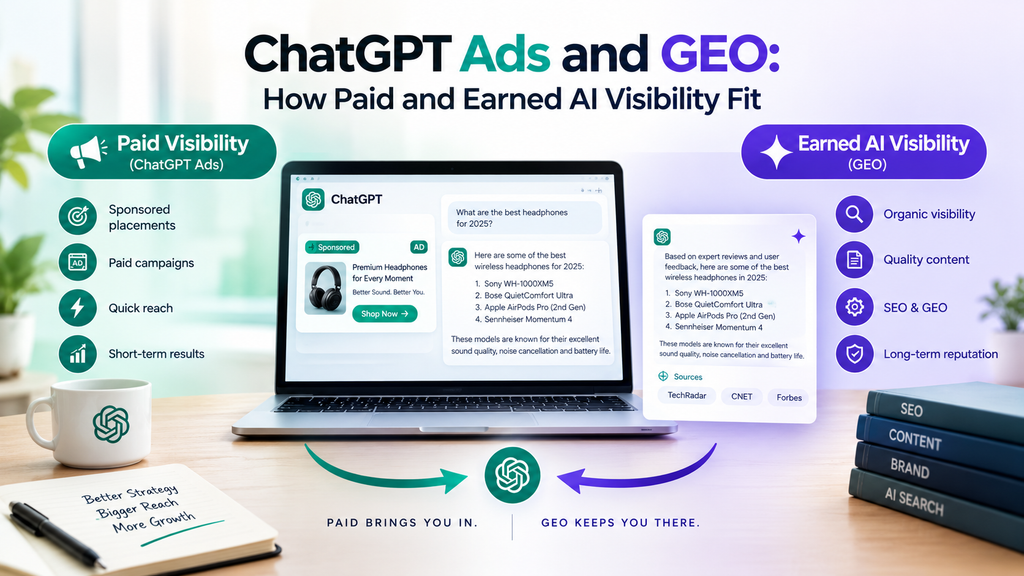
What ChatGPT Ads Actually Are
Ads appear as clearly labeled sponsored cards below ChatGPT’s responses, and they show only for logged-in adults on the Free and Go tiers. Plus, Pro, Business, Enterprise, and Edu accounts never see them. There are also no keywords to bid on. Ads are matched to the conversation happening in real time. OpenAI Advertising: The 2026 Guide +2
The rollout has moved quickly. OpenAI said on August 11, 2026 that ads had launched in the UK, Mexico, Brazil, Japan, and South Korea, with more markets planned. For readers in India, one industry report, citing Moneycontrol, says campaigns launched through Ads Manager in late August with budgets starting at ₹725 per day. OpenAITech Insider
One caution: formats, pricing, and availability change fast. Check OpenAI’s advertiser page before you plan a budget.
What GEO Means for Earned AI Visibility
Generative engine optimization (GEO) means making your brand easy for AI systems to understand, trust, and mention in answers. Nobody pays per mention. You earn it through clarity, authority, and a strong online footprint.
Here’s what I saw in one of my own tests. I asked ChatGPT, “What are the best digital marketing agencies in Kochi?” The answer mixed established agencies with sites that had strong, relevant information.
The surprise was that a good website alone didn’t guarantee a mention. The brand’s wider online presence mattered, and so did how clearly it described its services. That test also showed me how closely SEO and AI visibility overlap.
One test proves very little, though. Answers vary by query, location, and time, so treat any single result as a data point rather than a verdict.
ChatGPT Ads vs GEO: The Key Differences
| Factor | ChatGPT ads (paid) | GEO (earned) |
| Speed | Faster to launch | Slower to build |
| Control | You choose the message and landing page | You influence, but don’t control, the answer |
| Cost | Ongoing spend | Mostly time and content effort |
| Where it appears | A labeled card below the answer | Inside the answer itself |
| Best for | Testing offers and capturing intent | Building long-term trust and authority |
Why Paid Can’t Buy Your Way Into the Answer
This is the point people miss. OpenAI states that ads never influence what ChatGPT says. So a bigger budget won’t make ChatGPT recommend you in its organic answer. Social Revolt
That’s why the two channels do different jobs. An ad is a labeled placement you control. GEO decides whether you’re part of the answer at all. If you skip GEO, you’re paying to appear beside answers that ignore you.
How Paid and Earned AI Visibility Work Together
Build the Foundation First
With a limited budget, I’d start with organic work. Here’s what that covers:
- A complete Google Business Profile
- Clear service and location pages
- Case studies and genuine reviews
- Clear company and author information
- Content that answers real customer questions
Weak fundamentals hurt you whether you rely on ads or on GEO.
Use Paid Data to Feed GEO
Paid campaigns show you what people respond to. Look at which topics, services, and messages produce enquiries. Then build organic content around those themes. Paid becomes your research lab, and GEO turns those lessons into lasting visibility.
Measure Each Channel Separately
Track leads from paid campaigns apart from organic search and AI referrals. Mixed reporting hides what’s working. Impressions and mentions are interesting, but qualified enquiries and cost per customer are what pay the bills.
Common Mistakes to Avoid
- Chasing mentions over usefulness. Helpful, authoritative content beats begging for a mention.
- Treating GEO like a hack. Keyword stuffing and shortcuts don’t build trust.
- Ignoring the basics. Unclear services and missing reviews undermine everything else.
- Trusting one AI answer. One missing mention doesn’t mean you’re invisible.
- Rushing into a new platform. Understand targeting, pricing, and attribution before you scale spend.
- Ignoring business outcomes. Leads and sales matter more than impressions.
Start This Week: Three Steps
- Strengthen the fundamentals. Explain what you offer, who you serve, and where you operate. Fix your profile, collect reviews, and publish original content.
- Test AI visibility systematically. Pick 10–20 questions your customers might ask. Test them regularly, record which brands and sources appear, and improve your content around those topics.
- Prepare for paid testing without rushing. Set up analytics, conversion tracking, and landing pages first. If ChatGPT ads make sense in your market, start with a small controlled experiment and compare it against your existing channels.
FAQs
Do ChatGPT ads help my brand get mentioned in answers?
No. OpenAI says ads don’t influence ChatGPT’s responses. Earning mentions is a GEO job.
Should a small business start with ChatGPT ads or GEO?
On a tight budget, I’d start with GEO and conversion basics, then add a small paid test. Your situation may differ if you already have strong organic visibility.
Is GEO replacing SEO?
No. In my tests, sites with strong SEO and content authority appeared more often. GEO builds on SEO rather than replacing it.
How do I measure AI visibility?
Track a fixed set of customer questions over time. Record which brands appear, and watch referral traffic and enquiries.
Final Thoughts on ChatGPT Ads and GEO
ChatGPT ads give you speed and control. GEO gives you trust and staying power. Neither replaces the other.
Your action plan is simple. Build the foundation, test your AI visibility, and run small paid experiments with proper tracking. Then let the paid data guide your organic content.
On-Page Extras
Internal links (add at least 1):
- “Google Business Profile” → your local SEO guide
- “service and location pages” → your SEO services page
- “case studies” → your portfolio or case study page